Loading available options...
Overview
- Tour Type:Group tour
- Language:Arabic, Azerbaijan, English, Italian, Russian, Spanish, Turkish
The morning goes south to Gobustan National Park, a UNESCO World Heritage Site holding more than six thousand rock carvings cut into the limestone over roughly forty thousand years, and to the Gobustan mud volcanoes — cold, grey cones that bubble and spit on a plateau that looks nothing like the rest of the country. The afternoon turns to fire: the Ateshgah Fire Temple in Surakhani and the permanent flame of Yanardag on the hillside north of the city.
A professional guide travels with the group throughout, hotel pickup and drop-off are included, and — importantly — so is the off-road transfer to the mud volcanoes, which many operators charge for on site.
Highlights
- Gobustan National Park — UNESCO-listed rock art and archaeological museum
- Gobustan mud volcanoes — one of the largest concentrations in the world, reached by 4x4
- Ateshgah Fire Temple of Baku — the pentagonal temple of the eternal flame at Surakhani
- Yanardag Burning Mountain — a natural gas fire that has burned without stopping for decades
- Bibiheybat Mosque — seaside mosque above the Caspian
- Heydar Aliyev Center — photo stop at Zaha Hadid's landmark building
Includes/Excludes
- Hotel pickup and drop-off in Baku
- Transportation for the full day
- Professional licensed guide
- Off-road transfer to the mud volcanoes
- Entrance tickets
- Meals
- Personal expenses
Important information
• Entrance fees (per person, paid on site): Gobustan National Park — 15 AZN; Fire Temple & Yanardag combo ticket — 25 AZN.
• Entrance fees are subject to change.
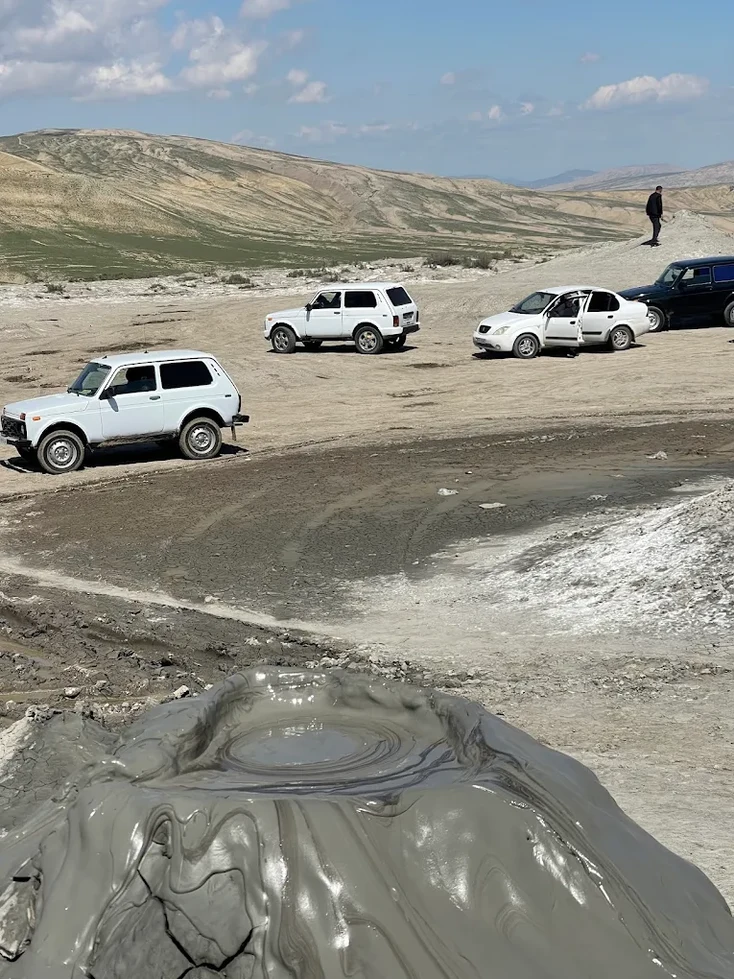
• The off-road vehicle fee to the mud volcanoes will be 5 AZN only cash.
• Comfortable shoes are recommended, particularly for the mud volcano area, where the ground is uneven and often sticky.
• Avoid light-coloured clothing and shoes at the volcanoes; the mud stains.
• There is very little shade at Gobustan — sun protection and water are advisable in summer.
• The itinerary may vary depending on weather conditions.
Cancellation policy
Itinerary
Pick up from 191 Lev Tolstoy Street, Baku
Bibiheybat Mosque
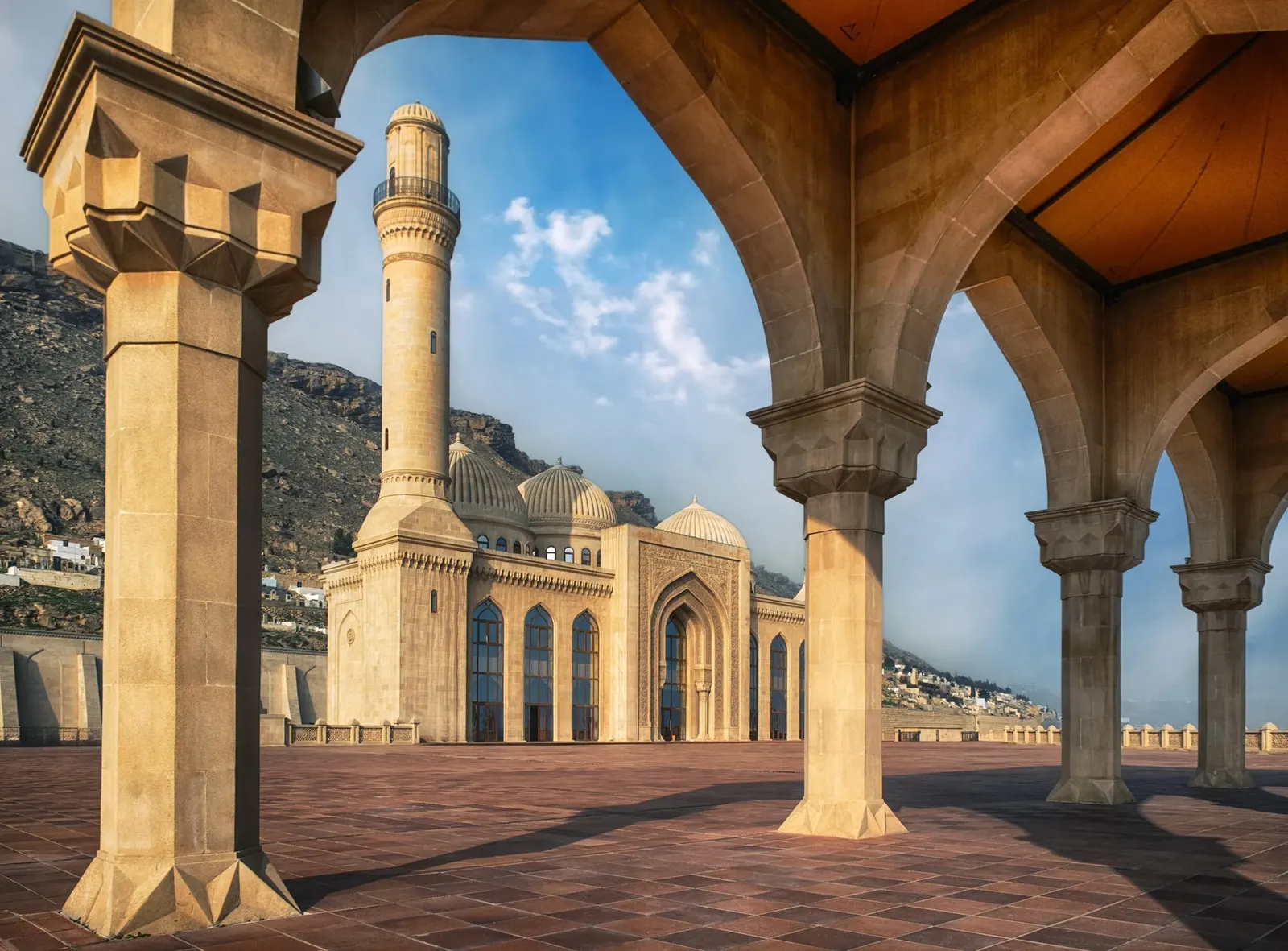
The first stop is the Bibiheybat Mosque, standing on a bluff above the bay just outside the city. The original was built in the thirteenth century over the tomb of Ukeyma Khanum, a descendant of the Prophet, and became one of the most important places of pilgrimage in the region. It was demolished in 1936 and rebuilt from the ground up in the 1990s, following the historical design — the version you see today is a reconstruction of a building that stood for seven centuries.
Gobustan National Park
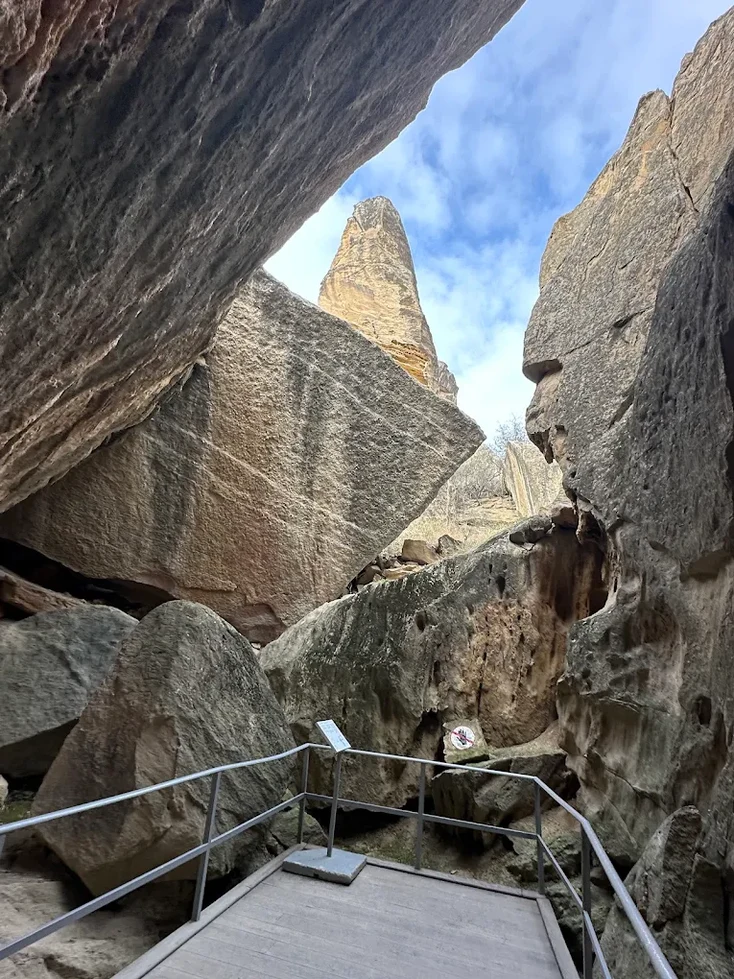
Gobustan National Park protects one of the densest collections of prehistoric rock art anywhere in the world. More than six thousand carvings are spread across the boulder fields of Boyukdash and the neighbouring hills, cut by people who lived here across some forty thousand years: hunting scenes, rows of dancers, aurochs, and — surprisingly for a place this far inland — long reed boats. The Gobustan Rock Art Cultural Landscape was inscribed on the UNESCO World Heritage List in 2007.
Two things here tend to stay with people. The first is the Gaval Dash, a flat slab of rock that rings like a tambourine when struck, still used to play rhythms. The second is a Latin inscription left by a soldier of the Roman Twelfth Legion in the first century AD — the easternmost Roman inscription ever found. The Gobustan museum on the site puts the carvings into chronological order before you walk up to them.
Gobustan Mud Volcanoes
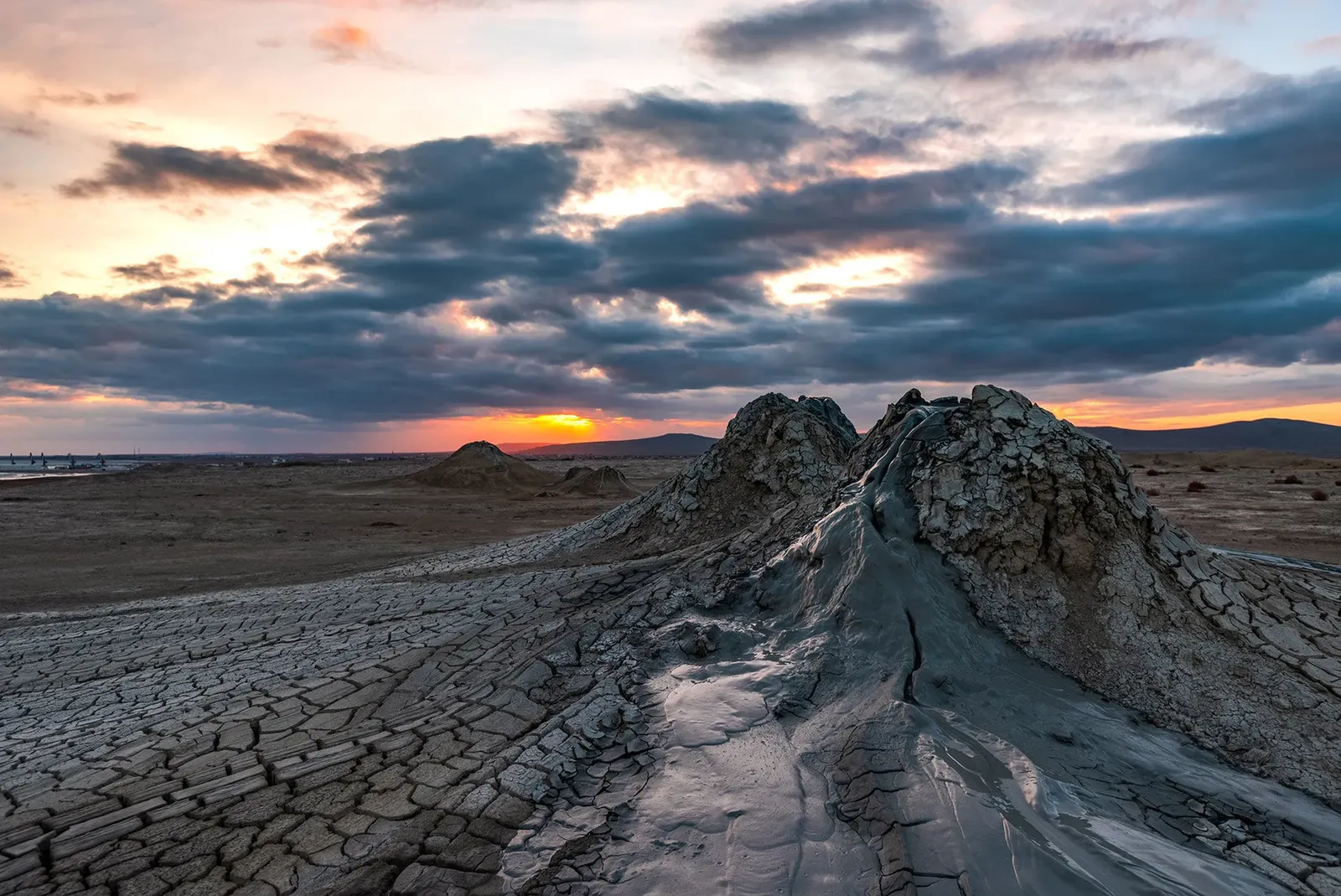
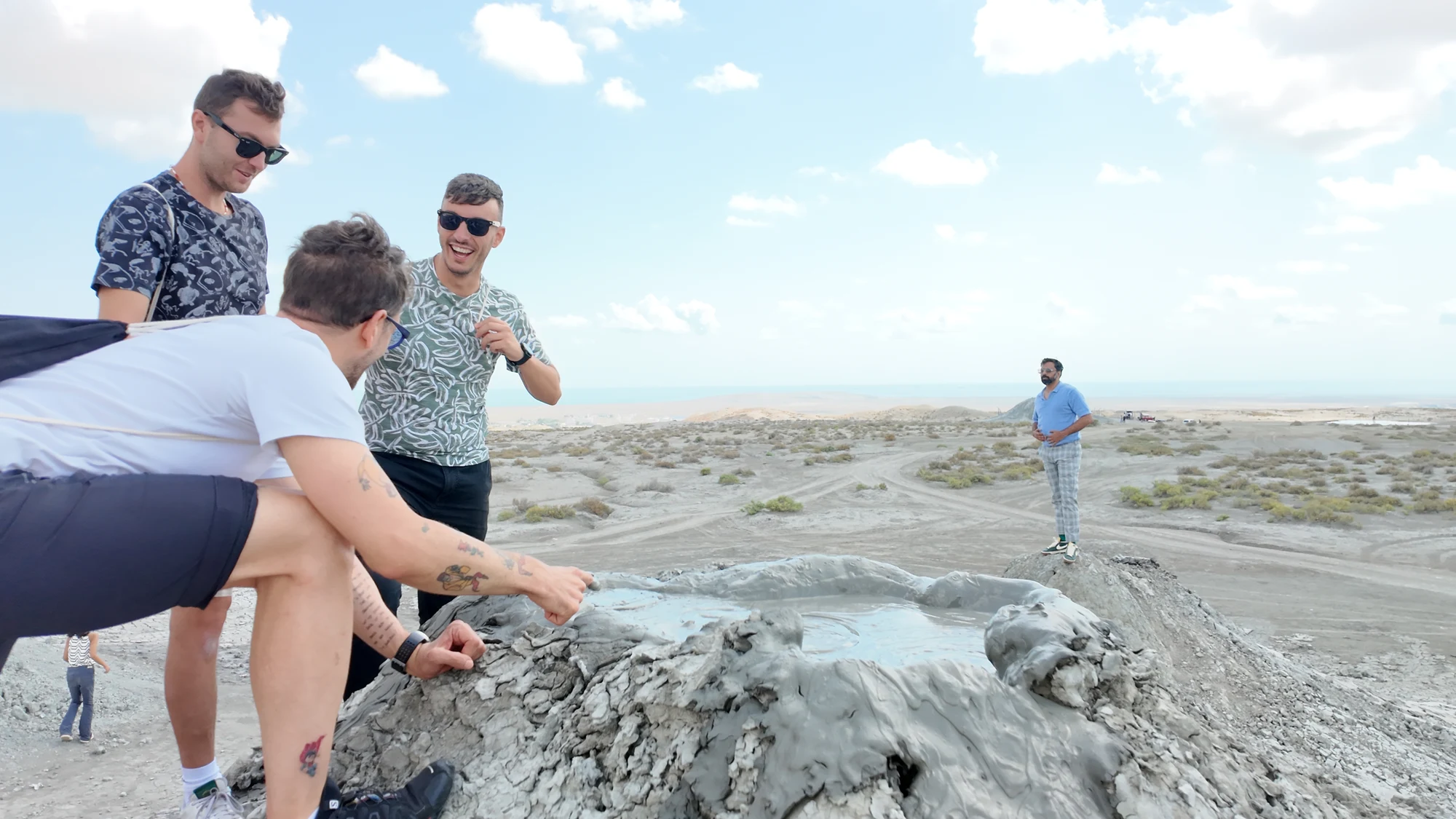
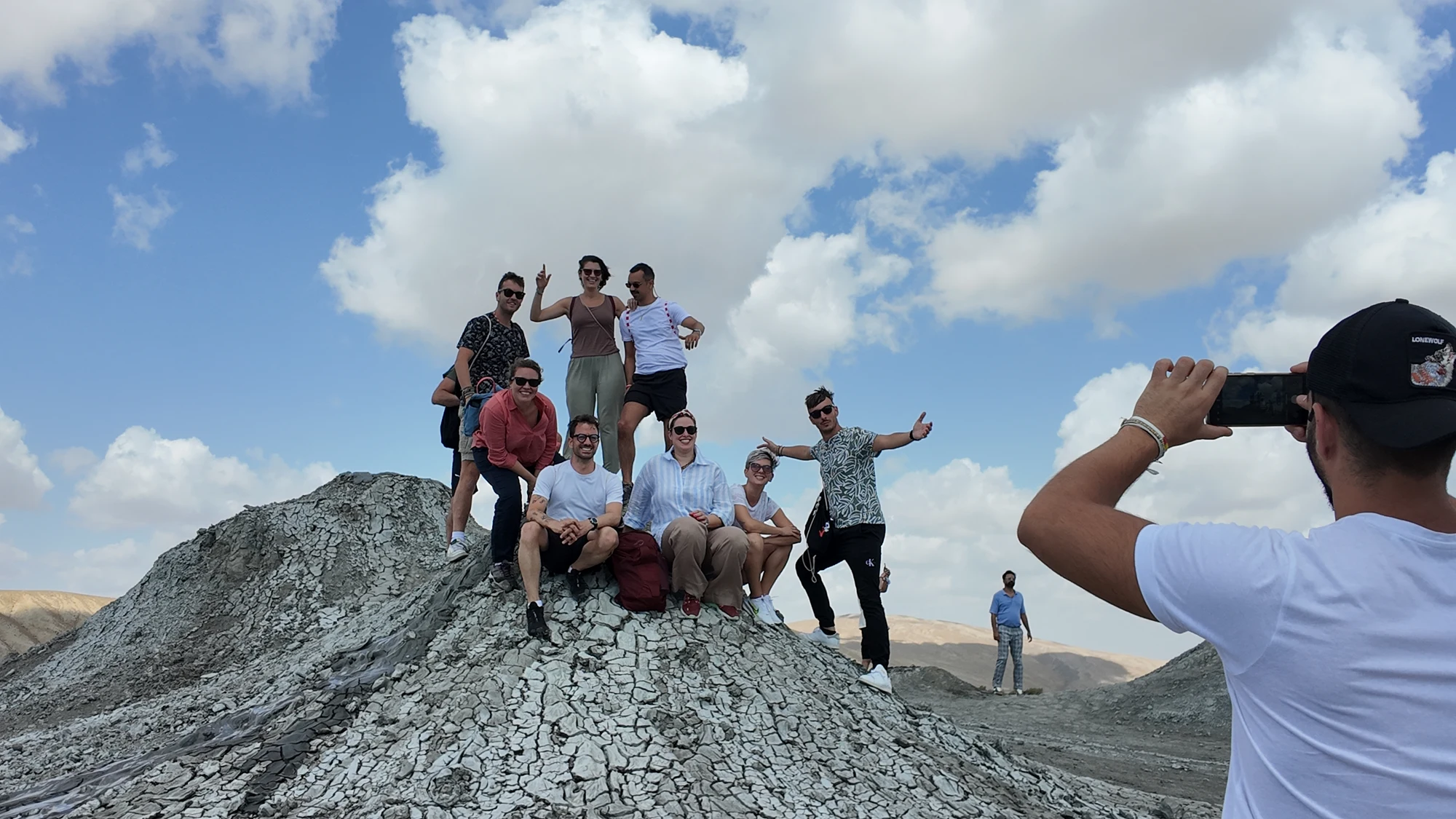
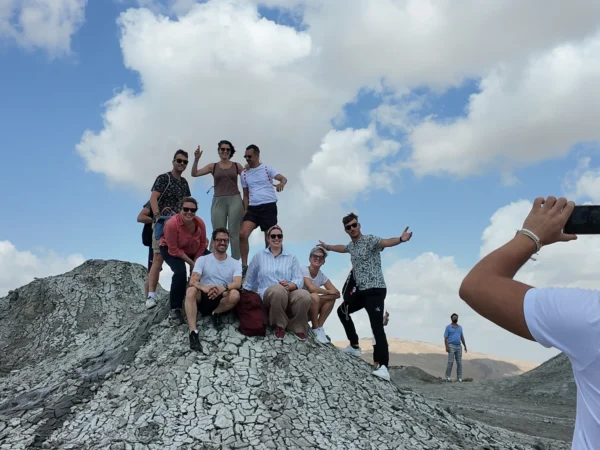
From the park, a 4x4 takes over for the last stretch — the track out to the volcano field is too rough for a coach, and this transfer is included in your tour price. The Gobustan mud volcanoes are not volcanic in the usual sense: there is no heat and no lava. Pressurised gas pushes cold grey mud to the surface, building low cones that gurgle, pop and occasionally throw out a spatter of clay. Azerbaijan has close to half of all the mud volcanoes on the planet, and this is the best place to stand among them. The landscape is genuinely strange — grey, cratered and often compared to the surface of the moon.
Ateshgah – Fire Temple of Baku
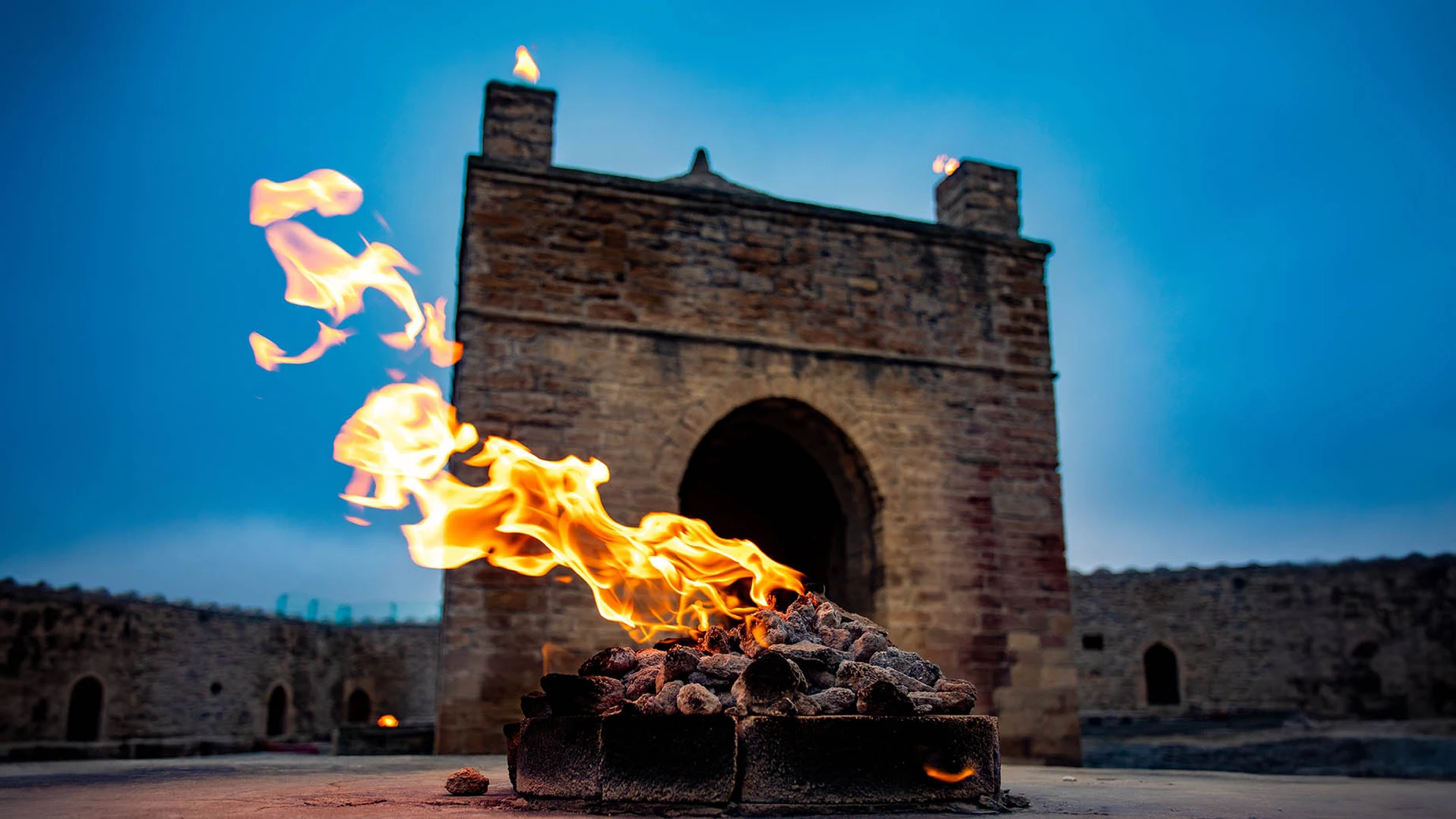
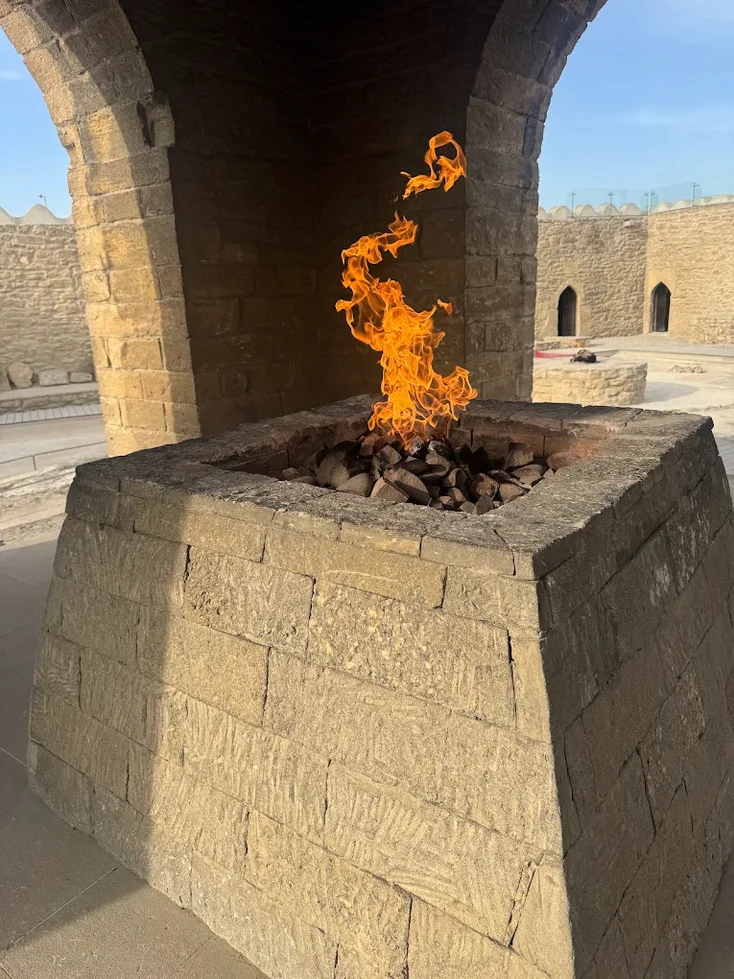
After lunch the route crosses to the other side of the peninsula and the village of Surakhani, where the Ateshgah Fire Temple stands. Built in its present pentagonal form in the seventeenth and eighteenth centuries, Ateshgah is laid out like a caravanserai, with cells around a courtyard and an altar at the centre where a natural gas vent once burned unaided. Inscriptions carved above the doorways are in Sanskrit and Persian, left by Indian merchants and ascetics who worshipped here on the trade route, and the site connects to Zoroastrian fire veneration older still. It has been a museum since the 1970s.
Yanardag – Burning Mountain
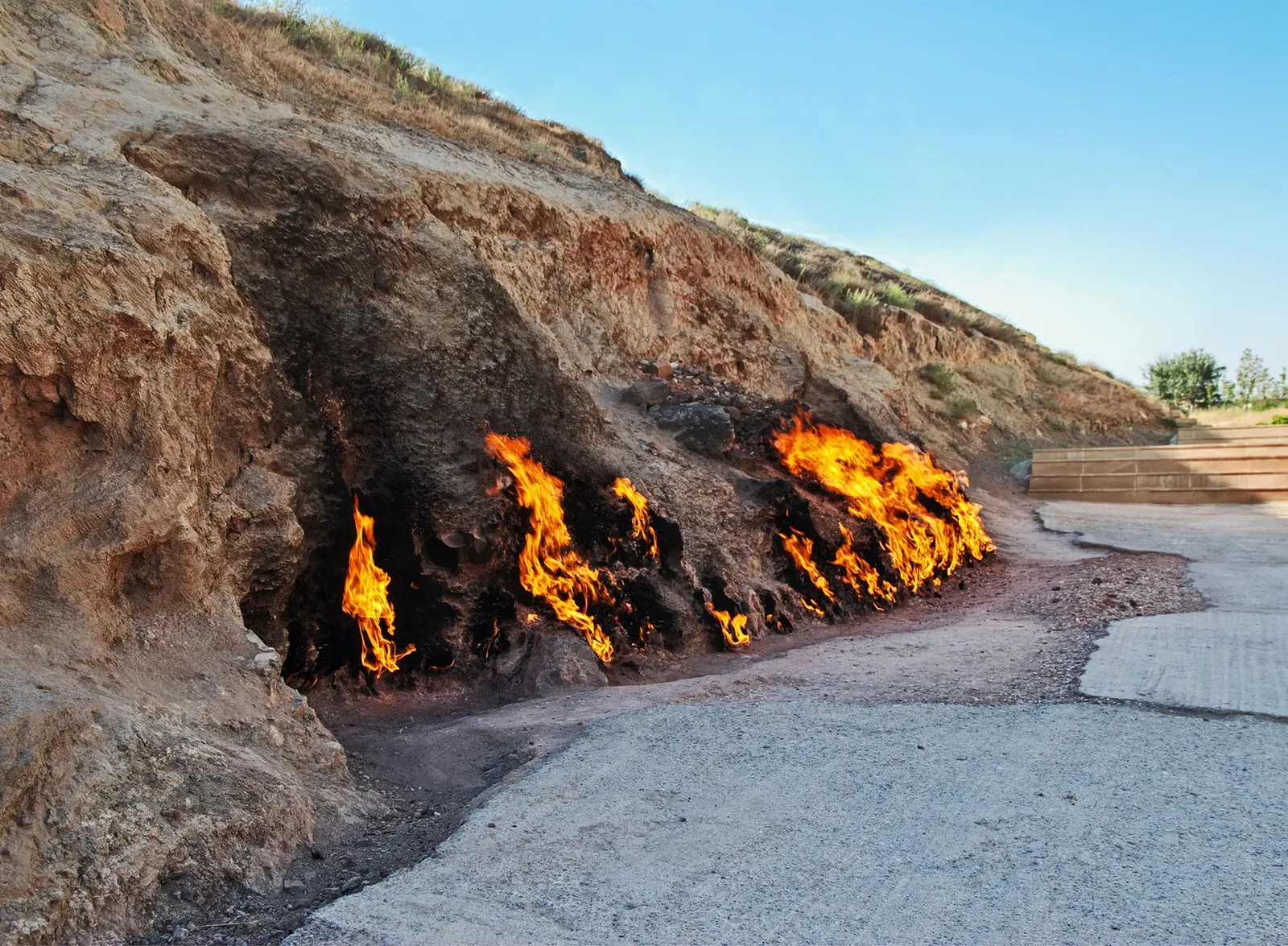
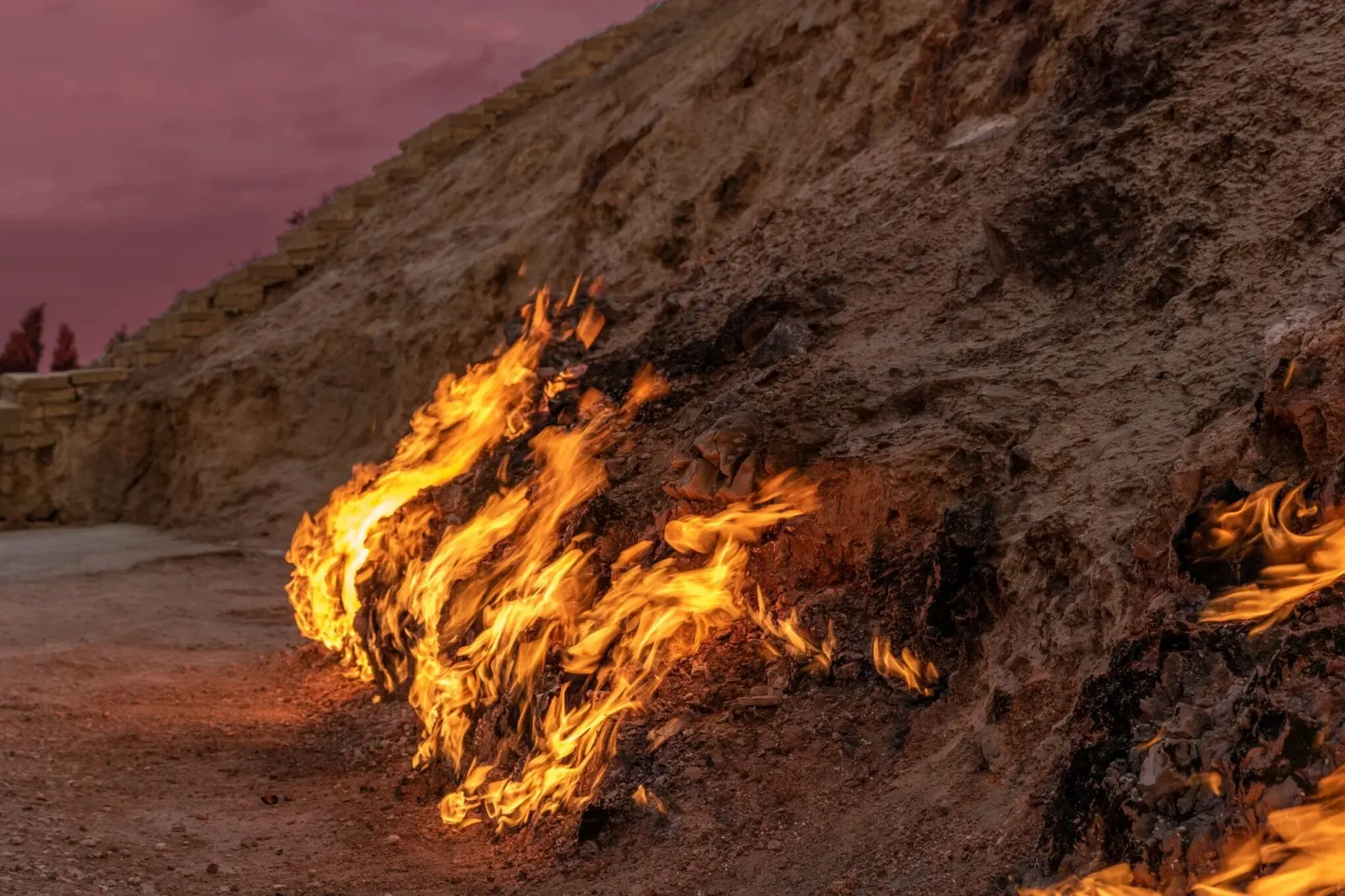
Yanardag is the simplest sight of the day and, for many, the most memorable: a low hillside where natural gas seeps through the sandstone and burns in a continuous wall of flame, three metres wide and never extinguished — not by rain, not by snow. Fires like this are what gave the country its Land of Fire name, and travellers have been writing about them since the Middle Ages. The flames are at their most dramatic after dark, but they burn all day.
Heydar Aliyev Center (Photo Stop)
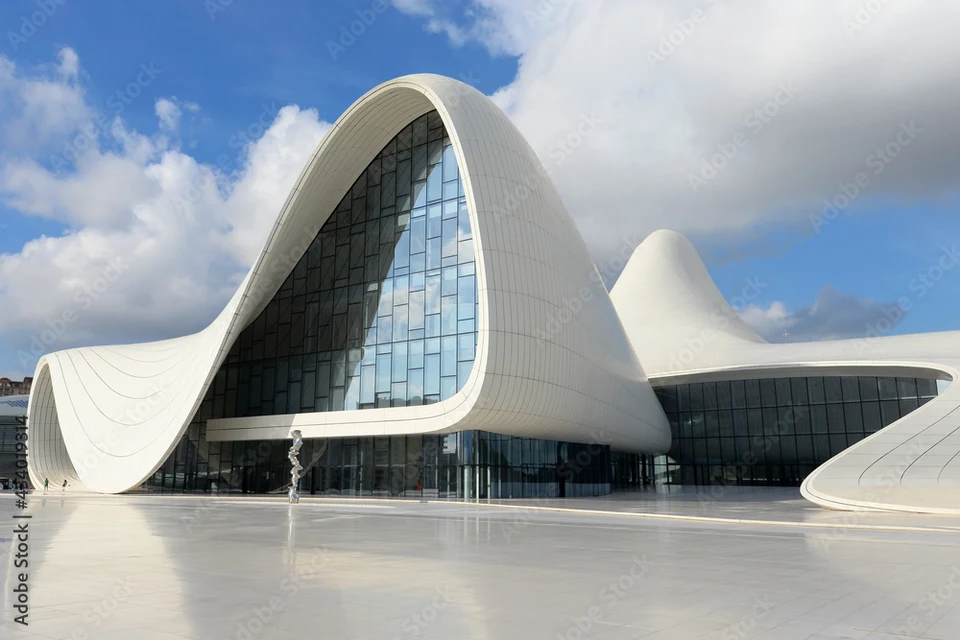
On the way back into the city there is a photo stop at the Heydar Aliyev Center, designed by Zaha Hadid and opened in 2012. Its white curves avoid straight lines almost entirely, and the building won Design of the Year in 2014 — the first time the award went to a work of architecture. The surrounding park is where the best photographs are taken.
Drop off at 191 Lev Tolstoy Street, Baku
Frequently asked questions
What is included in the Gobustan and Absheron tour?
Is the off-road vehicle fee to the mud volcanoes included?
Are entrance tickets included?
Is Gobustan a UNESCO World Heritage Site?
What is special about the Gobustan mud volcanoes?
Is Yanardag always burning?
How far is Gobustan from Baku?
What is the best time of year for this tour?
Is this tour suitable for children?
Is a private version available?
Extra Services

Childcare services
Childseat
Drop-off service
Guide in Arabic
Guide in Chinese
Guide in Hebrew
Guide in Italian
Guide in Korean
Guide in Spanish
Pick-up service
Make enquiry
Have a question before booking? Message us to learn more.
Why booking with Tripstan?
You might also like...
Login to use
Private Gobustan and Absheron Tour from Baku – Mud Volcanoes, Fire Temple & Yanardag
Duration
Login to use

Login to use

Login to use